Missed London? Beyond the Map goes live online on Dec 8.
Beyond the Map 2026: Honest stories from the people turning customer insight into action
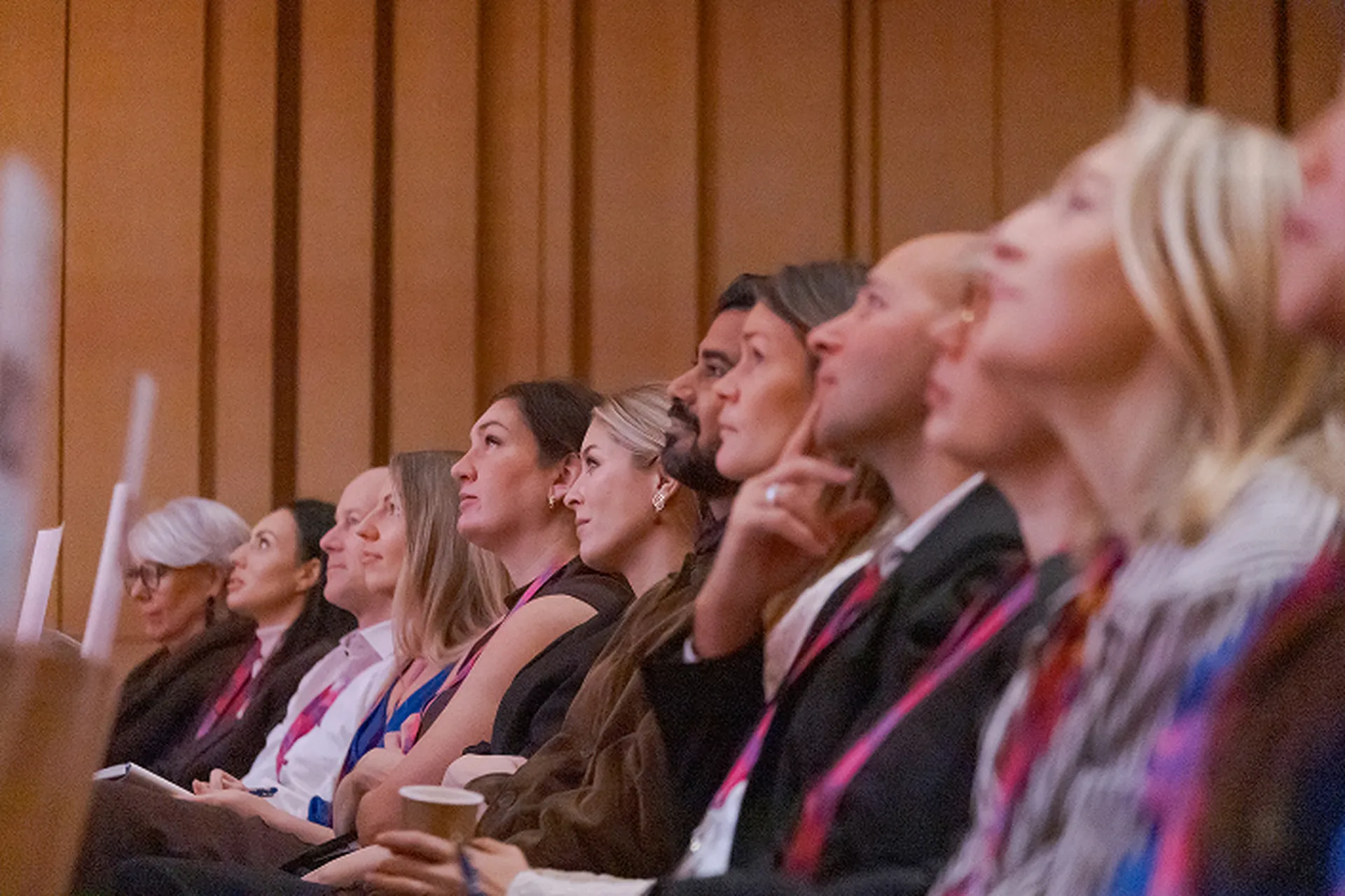
How do you turn customer insight into a decision someone will act on? This year’s Beyond the Map brought nearly 300 journey management leaders, practitioners and partners from around the world to London from 9-11 November to compare notes and find out. Sessions explored what it takes to make journey work pay off, from building operating models that work at scale to proving the value of CX and giving AI the right context.
Outside it was cold and drizzly, but inside Kings Place the mood was open, curious and candid. It felt like a warm reunion, with plenty of new faces too. Across 33 speakers from 26 organizations, people shared results they were proud of, projects that stalled, approaches they changed and questions they were still working through. Those stories kept people talking shop from the welcome party through coffee breaks to the closing drinks.
From insight to action
Bill Staikos, founder of Be Customer Led, and TheyDo CEO Jochem van der Veer opened with a challenge that carried through both days: organizations are collecting signals faster than they can act on them.
“We don’t have an AI problem; we have a decision-making problem,” Jochem said.
He was drawing on TheyDo’s new research, The Decision-Confidence Gap, which looks at why so much of the data enterprises collect never makes it into a decision.
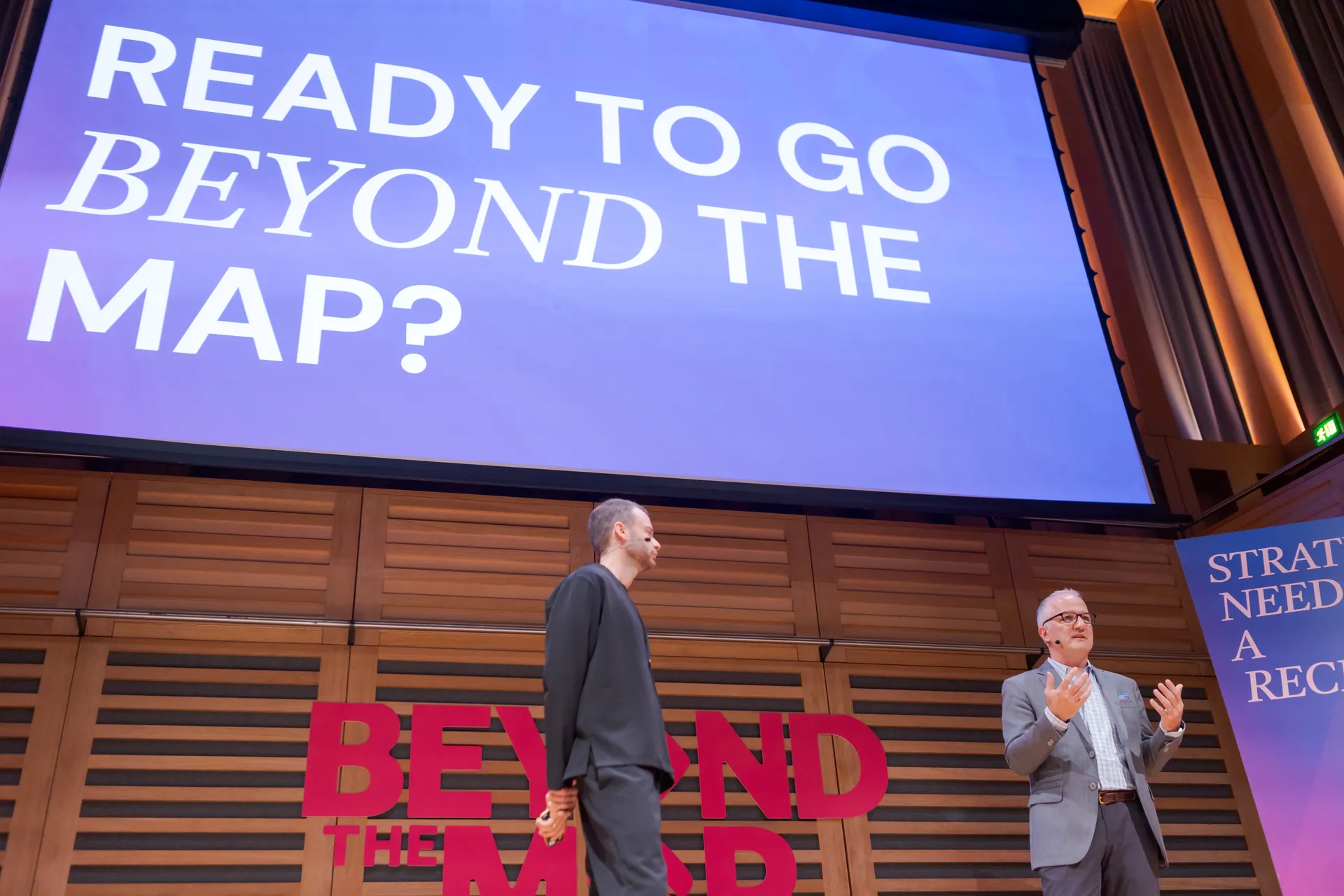
The case studies presented at Beyond the Map showed what closing the gap between customer insight and action can look like:
Pfizer’s Grace de Athayde shared a 90% faster insight-to-action cycle, including a user interview in Japan that led to a production fix the next day.
Kimberly-Clark’s Kate Kapp and Erika Knight Styles connected customer effort to commercial results: a 1% change was worth $1 to $2 million in net sales.
Autodesk’s Khayyam (Khay) Lasi showed how connected customer context helped turn four to five weeks of work into 48 hours.
FedEx’s Nick Forward and Filipe Oliveira brought proof of their own: fixing the root causes of invoice errors cut credit notes by 20% in a year.
LähiTapiola’s Jenni Reijonen designed the customer journey first when an insurance portfolio had to end. The replacement product’s conversion rate came in three percentage points higher than it would have without that work.
Banco Pichincha’s Juan Sebastián Narváez started with 20% of the bank’s portfolio. Now about 56% runs on journey management.
Just as useful were the stories about changing course. Grundfos’s Cecilie Elisabeth Kobbelgaard described a journey that delivered results, then lost momentum when its owner couldn’t sustain it. CHG Healthcare’s Dan Sullivan shared how 35% of 108 opportunities were later canceled, a lesson in what a rushed timeline costs. MetLife’s Caroline Maté explained why her team stepped back to one partner and one journey at a time. Caroline’s advice: “Start smaller than feels comfortable.”
Lloyds Banking Group’s Alberto Ferreira, building an experience architecture for 70,000 colleagues, put it another way: “You can start small, you can start big, but start, and start having the right conversations. Those conversations lay the tracks.”
The speakers at Beyond the Map described a gap we’ve measured too. Our research with 1,000 enterprise decision-makers found that less than half (49%) of collected data actually informs a decision.
Download The Decision-Confidence Gap report →
Earning a place in the decisions that matter
From the stage, TheyDo’s CCO Martin Palamarz and Marc Fonteijn, founder of Service Design Show and the event’s MC, asked the audience for a show of hands. Most people worked with journeys. Far fewer had tied one to a business KPI, and fewer still had an executive who owned that number. Most people worked with journeys. Far fewer had tied one to a business KPI, and fewer still had an executive who owned that number.
Their live role-play made the point. A pitch for more mapping time struggled. A pitch addressing a churn problem worth millions got a yes.
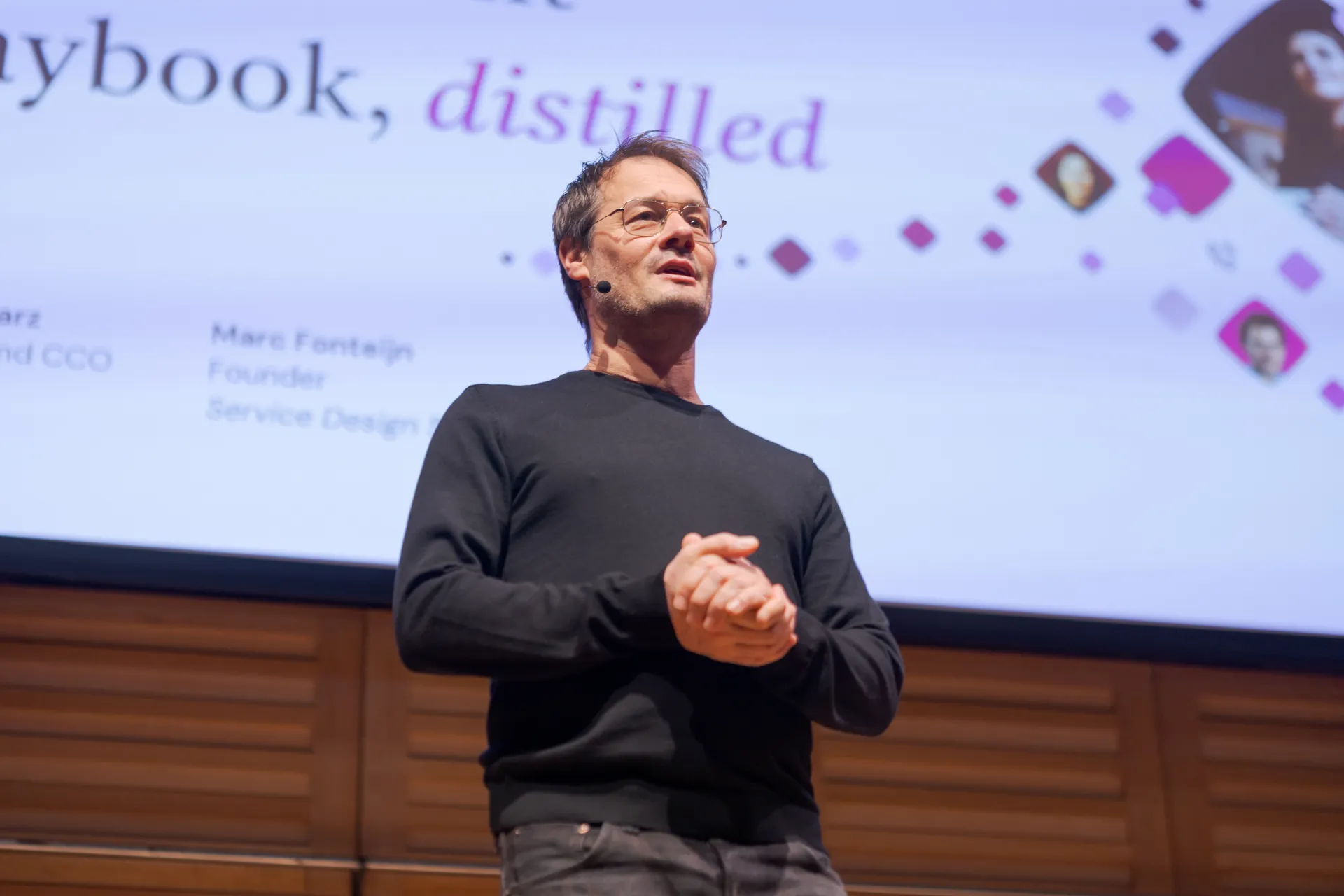 Martin Palamarz on what it takes to earn a seat at the decision table.
Some teams are already working this way. At Essent, the team that drives sales in the buying journey also owns its customer experience target, and has to explain when a sales push hurts the journey. PwC’s Lauren Pleydell-Pearce and Kirstie Wilson warned what happens without that: if stakeholders are asked to work together but are “all measured individually, it’s never going to work, ever.”
Synchrony’s JD Buckley offered another way into that conversation. Her gateway strategy connects research to roadmap items product teams already own. “We’re not asking them to do more. We’re helping them do what they’re already doing, just a little bit better,” she said.
Jochem and TheyDo’s Head of Product and Design, Memie Huang, introduced Routines, which puts the TheyDo Agent to work on recurring CX tasks, and Deep Query, which looks across all your data. Memie made the responsibility clear: “You are in control. You’re the approver.”
The conversations were part of the work
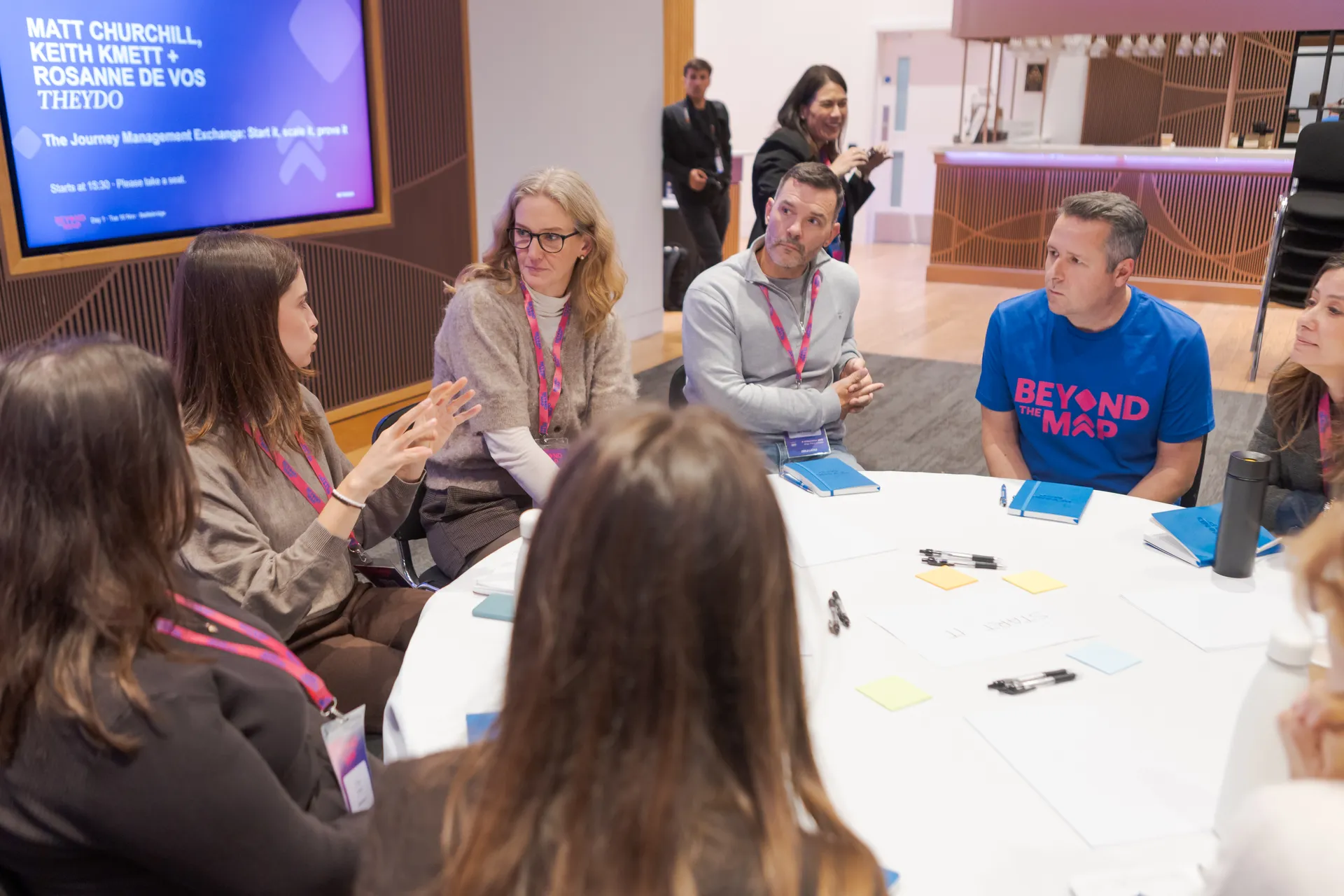
The workshops gave people room to put ideas into practice. Catherine Collins of Moxie asked participants to try different ways of listening. Grace de Athayde, Khay Lasi and TheyDo coach Amit Kiran helped a sold-out room turn journey practices into AI skills. TheyDo’s Matt Churchill, Keith Kmett and Rosanne de Vos hosted a peer exchange on starting, scaling and proving journey management. Martin Palamarz and Marc Fonteijn helped teams build business cases that get an executive to own the number, while Genevieve Brechel helped participants diagnose why journeys fade and pick one thing to try next.
That was the spirit of the event: people sharing enough of the messy reality for someone else to learn from it.
More from the stage
MediaMarktSaturn: Stefan Wörnle shared five practical levers his team uses to turn journey insight into business results, including what didn’t work. In one example, a simple fix to the in-store repair process, with no IT changes needed, cut turnaround time by a couple of days on average.
NCR Voyix: Berri Berto argued for scaling context, not agents. After three years of building journeys from a UX-first starting point, the team now has executives coming to them for customer context. Berri’s advice: start small and understand what drives decisions.
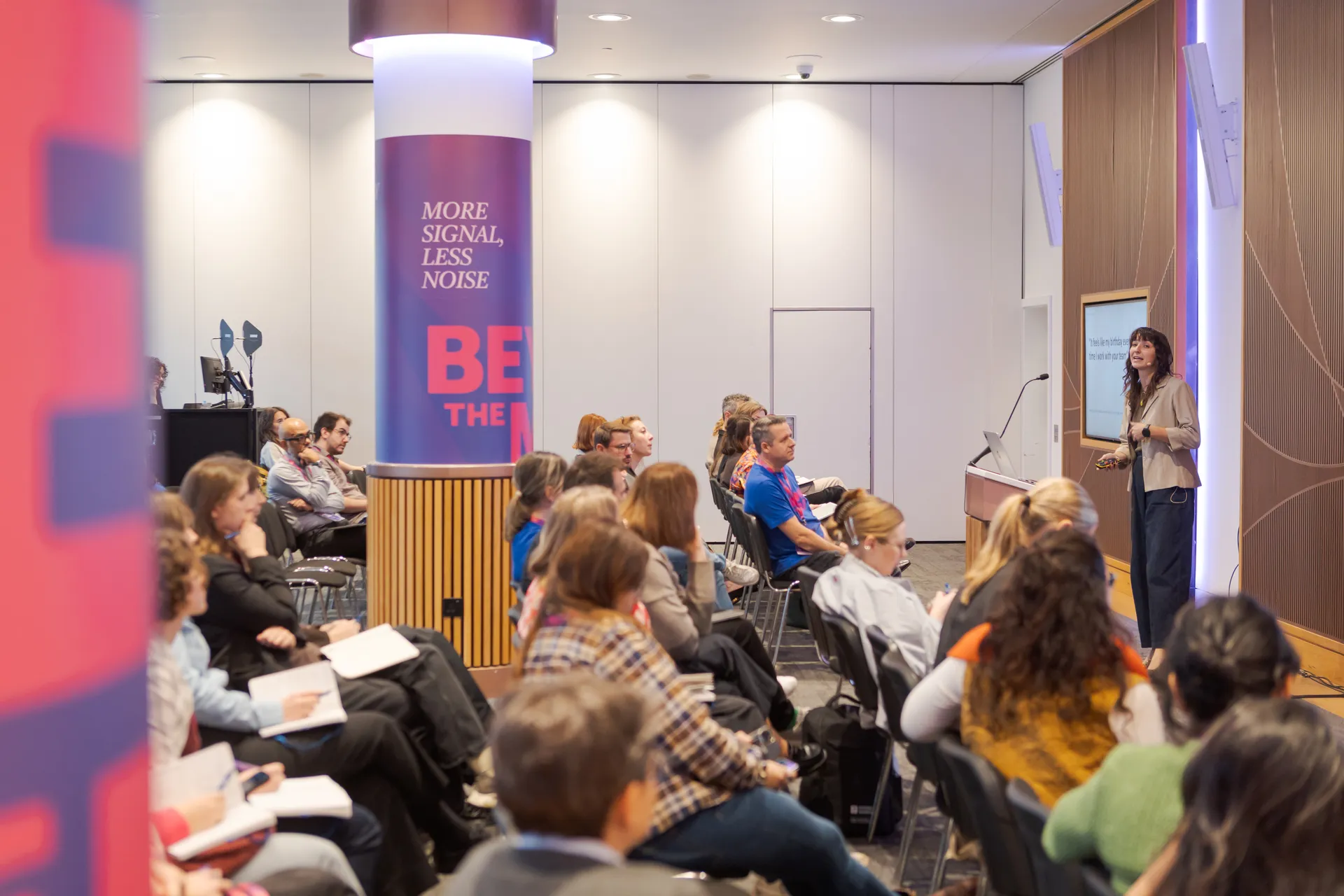 Berri Berto on scaling context, not agents.
ADIX: Aude Jacquemin shared real stories, from product owners to country marketing teams, about what slows transformation down. Her four lessons spelled out the session title: align harder on what matters, get better at deciding together, move faster when results call for it, and grow stronger through shared habits.
Deloitte Digital: Julia Challicom and Stu Hamilton showed how companies can get more from the technology they already have by connecting it around customer journeys. In one example, mapping a single journey revealed that 90% of its complaints came from one pain point the data had been hiding.
IDA and DAY21: Amanda Fuglsang Vejle and Katrine Ly explained why so many journey management pilots fade once the consultants leave, and what IDA did differently. Mapping the “becoming a member” journey showed the real problem started before sign-up, and the findings led to a small reorganization that gave onboarding and its KPIs a single owner.
What we learned together
Across keynotes, cases and coffee breaks, five lessons kept coming up:
Find the person who owns the number. Connect journey work to a business problem and the executive accountable for solving it.
Give AI useful context. Connected evidence helps it produce answers people can trace, question and use.
Keep people in charge. Judgment, listening and responsibility remain human work.
Start small and show proof. One journey with a measurable result can create momentum for the next.
Build ownership into the work. Journeys need people, shared measures and habits that keep them useful.
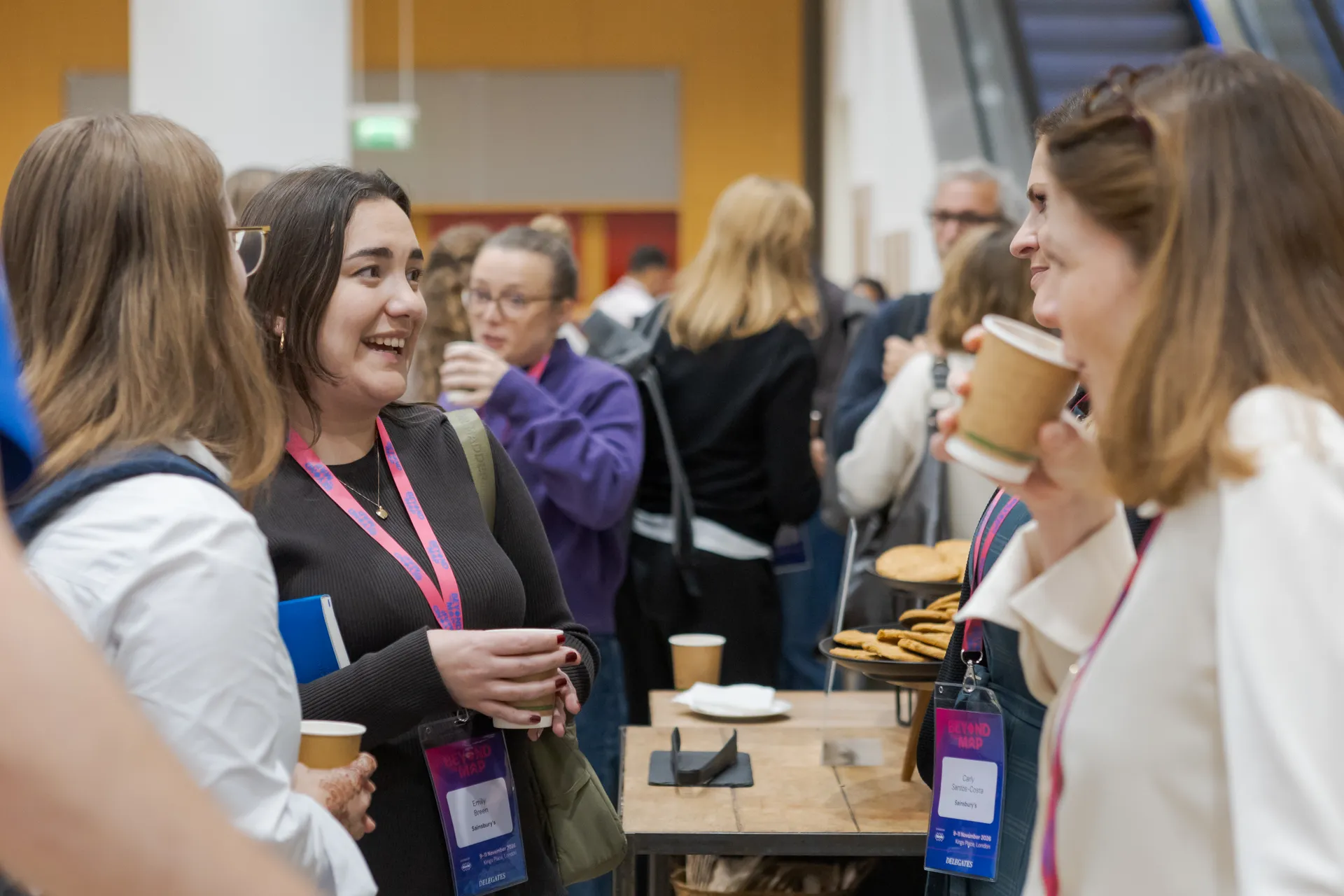 Some of the best conversations happened between sessions.
Both days ended with bigger-picture keynotes. Aljan de Boer of Trendsactive reminded us that as customer experiences become more frictionless, connection is where you can still compete.
Explorer and scientist Felicity Aston brought the conference to a close with the story of skiing alone across Antarctica, the first woman ever to do it. Every morning, she woke in a tiny tent with one thought: I can’t do this. Outside, a headwind and minus 40°C were waiting. Some days, the only real progress was getting out of the tent and starting again.
Her lesson for anyone doing slow, hard transformation work: progress can feel impossibly small while you’re making it, but it still counts. “Just keep getting out of the tent.”
It was a fitting close to two days of people helping one another find a way forward.
Thank you to our speakers, sponsors Harmonic Design and PwC, coaches, crew, and everyone who brought their questions and experience to London.
Couldn’t make it to London? Catch JD Buckley (Synchrony), Dan Sullivan (CHG Healthcare), and a live product walkthrough with Jochem and Memie at Beyond the Map: Virtual Edition on 8 December.